Thundara Prime
The Ghost Signal
The network had been dead for eleven hours when it told Kael Rook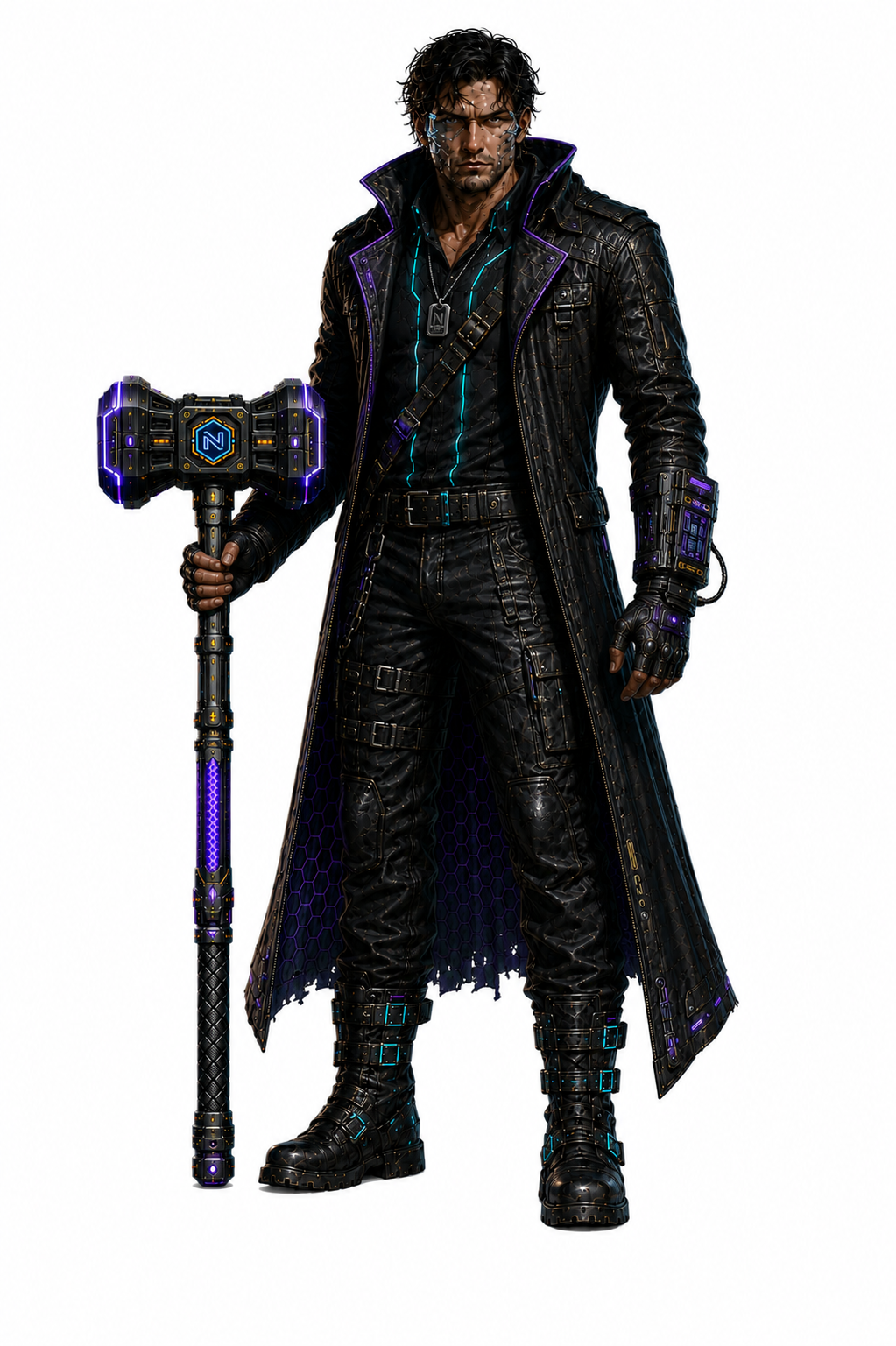 Kael RookNeon Nomad · Infrastructure Survivor to run. The warning reached the cracked lens over his right eye without source identification, routing history, or authentication code. No words appeared. A red point of light opened at the edge of his vision, divided into three pulsing chevrons, and swept away from the platform beneath his boots.
Kael remained where he was. Around him, the elevated transit station groaned beneath the weight of a city no longer certain which direction gravity intended to pull it. Dead advertisement panels flickered along the concourse. A woman made of blue light smiled through half a face and invited passengers to experience tomorrow aboard the Thundara Metropolitan Line.
There would be no tomorrow aboard the line.
The rails had twisted three kilometers east, where the foundations of the outer districts had shifted during the shield event. Two trains remained suspended between stations, their emergency lights visible through the smoke. Beyond the fractured windows, the skyline of outer Thunderdome flickered in fragments. Entire towers had gone dark. Others still burned with advertisements no one had remembered to shut down.
Far beyond them, dominating the horizon, the sphere around Thunderdome City glowed like a second moon resting on the earth. The red chevrons flashed again. This time they were brighter. Faster.
The floor beneath Kael’s left boot dropped half a centimeter. He looked down. A hairline fracture traveled across the platform, passed between his feet, and disappeared beneath the transit map.
“Identify.”
The lens offered no sender. No authority. No explanation. Only the red light, pointing away.
Kael shifted his pulse hammer into both hands. The tool had once been used to break hardened foundations without damaging surrounding infrastructure. Since the severance, it had become a weapon, a breaching instrument, and—when the city demanded it—a very expensive walking stick.
“You have access to my lens,” he said. “You can answer a question.”
For one breath, the chevrons stopped. Text appeared beneath them.
CHOICE REMAINS YOURS.
Then the red points accelerated until they became a single streak across his vision. Kael ran. The platform folded behind him. Steel screamed. Glass burst outward. The transit map vanished into a red-black void as the western half of the station dropped through three levels of support structure. Kael reached the emergency bridge a heartbeat before the concourse tore free.
He caught the rail with one hand. The pulse hammer struck the deck. The bridge swung hard enough to drive his shoulder into the barrier. Below him, the station continued falling.
The red light disappeared. Kael hung over the open shaft and stared at the blank lens.
“That was not an answer.”
Nothing replied.
* * *
Elsewhere inside the shield, Jonas Ward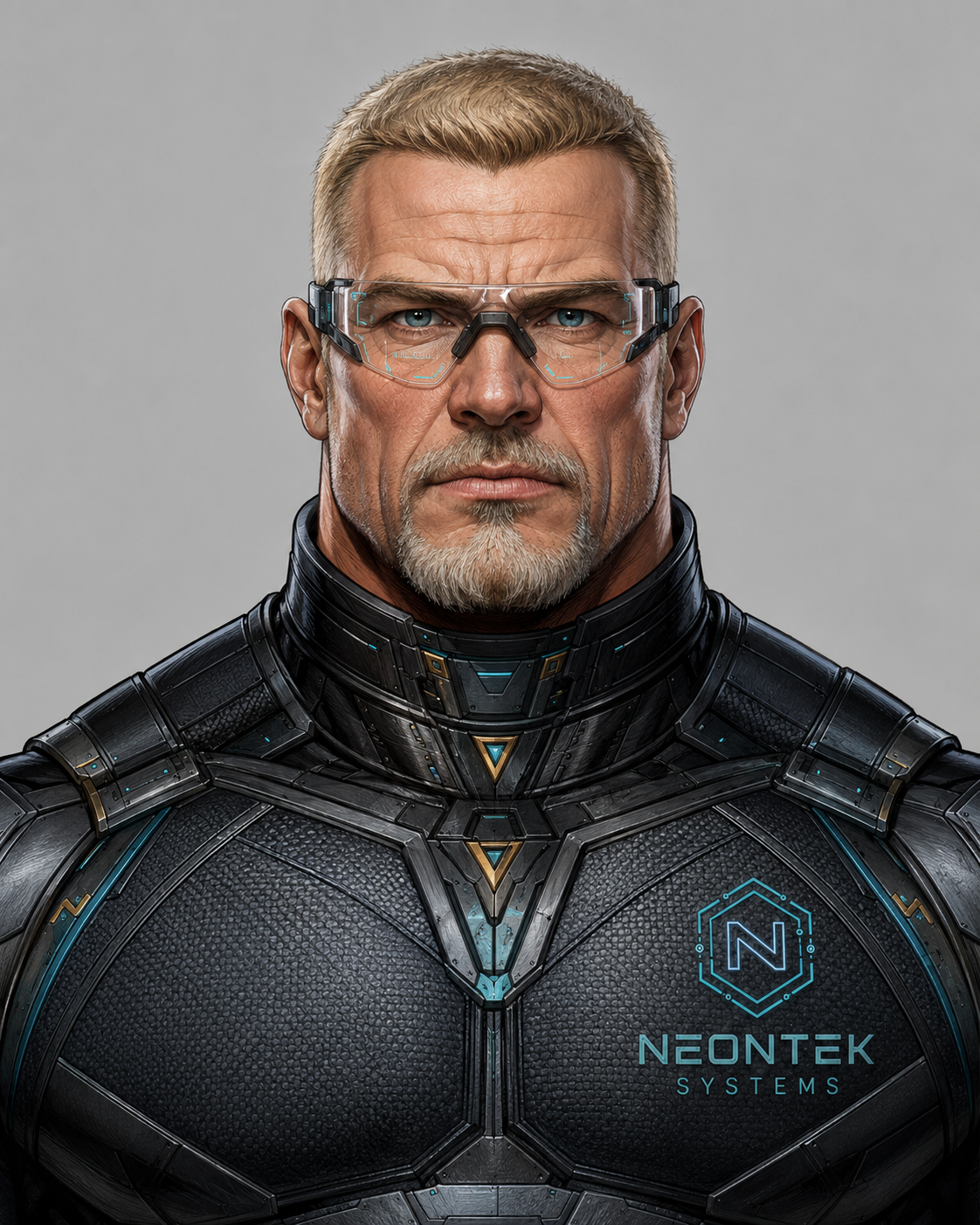 Jonas WardLeader of the Lantern Bearers stood ready to tell NeonSabre
 NeonSABREThe Guardian · Central Figure why he had been watching her for seven years. The confession began, in his memory, shortly after the Great Merge, in a Byterium review room designed to make every conversation feel temporary. The walls held no corporate colors. The table had no embedded network surface, and even the air recorder had been removed, leaving a pale rectangle where its housing had once been. Ventilation kept the room too cold and carried the dry smell of paper, an odor already unusual in a networked office. Beyond the sealed door, Byterium lifts passed as muted vibrations through the floor while Commandant Darius Koa
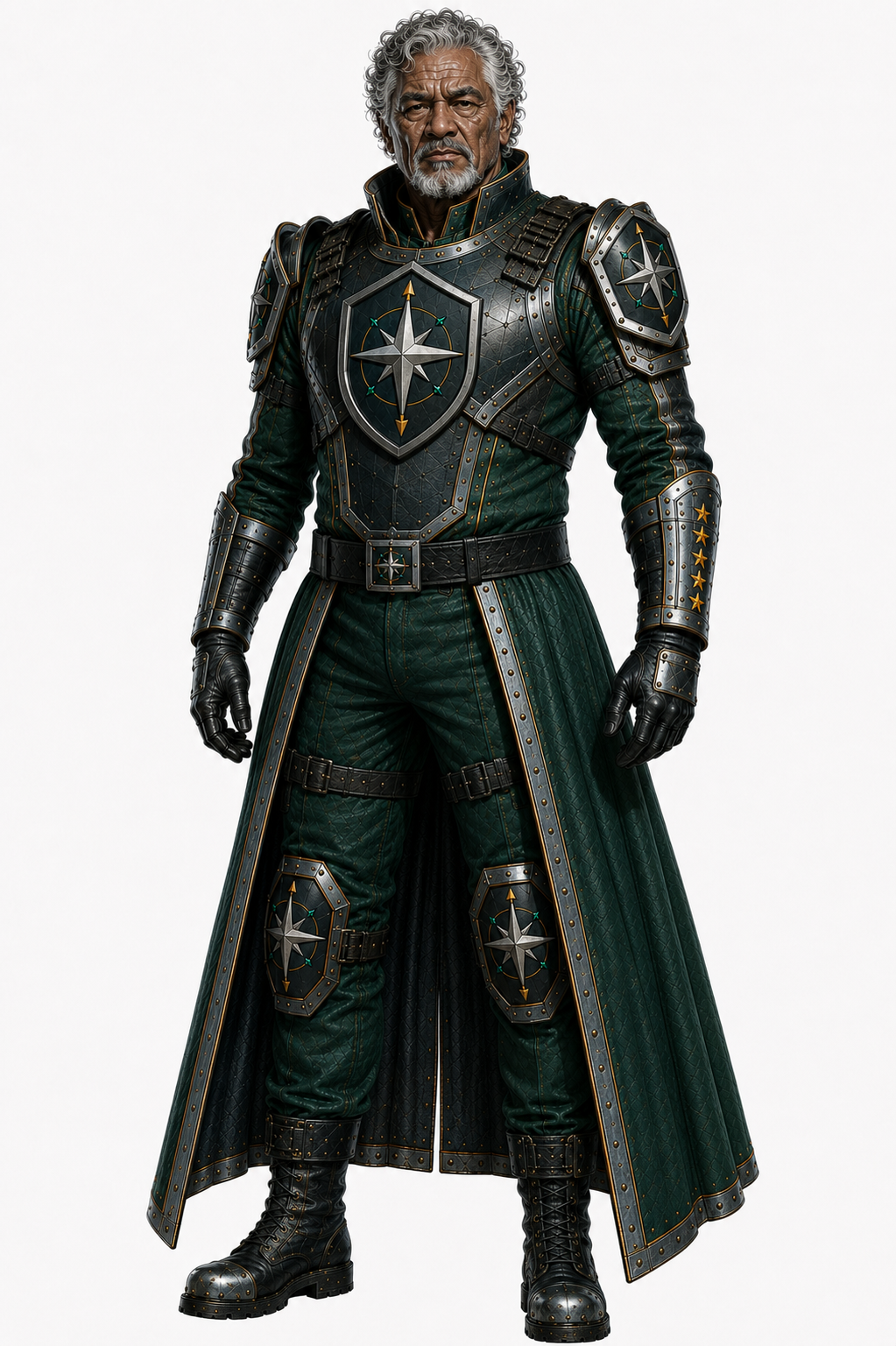 Commandant Darius KoaCommandant · Strategic Command sat alone beneath the room’s only light with a paper folder closed beneath one hand.
Jonas noticed the folder first. “No network record,” he said.
“A record,” Koa corrected. “Just not one that can revise itself after we leave.”
Jonas had completed three years of Strategic Command covert-field preparation before Koa summoned him. His public assignment to emergency response and infrastructure continuity was real. So were the collapsed towers, missing workers, and broken supply agreements that work placed in front of him. Frightened administrators waited among them. Koa was not offering him a false life. He was opening a second duty inside the first.
“The Great Merge succeeded,” Koa said. “That is the verified statement.”
“You don’t believe it?”
“Belief is not the issue. The Merge produced NeonSabre. Project OMEGA is expanding. Innovation Crescent is becoming the place where every unexplained success is called proof and every unexplained failure is called an implementation problem.”
He slid the folder across the table. On the cover, in plain black type, were the words INDEPENDENT CONTINUITY REVIEW.
“This is not a Strategic Command intelligence unit,” Koa said. “It is a narrowly compartmentalized Byterium review established under my transitional authority. You will be its sole long-term field observer.”
Jonas did not touch the folder. “Targets?”
“Subjects of review. NeonSabre. Dr. Elara Venn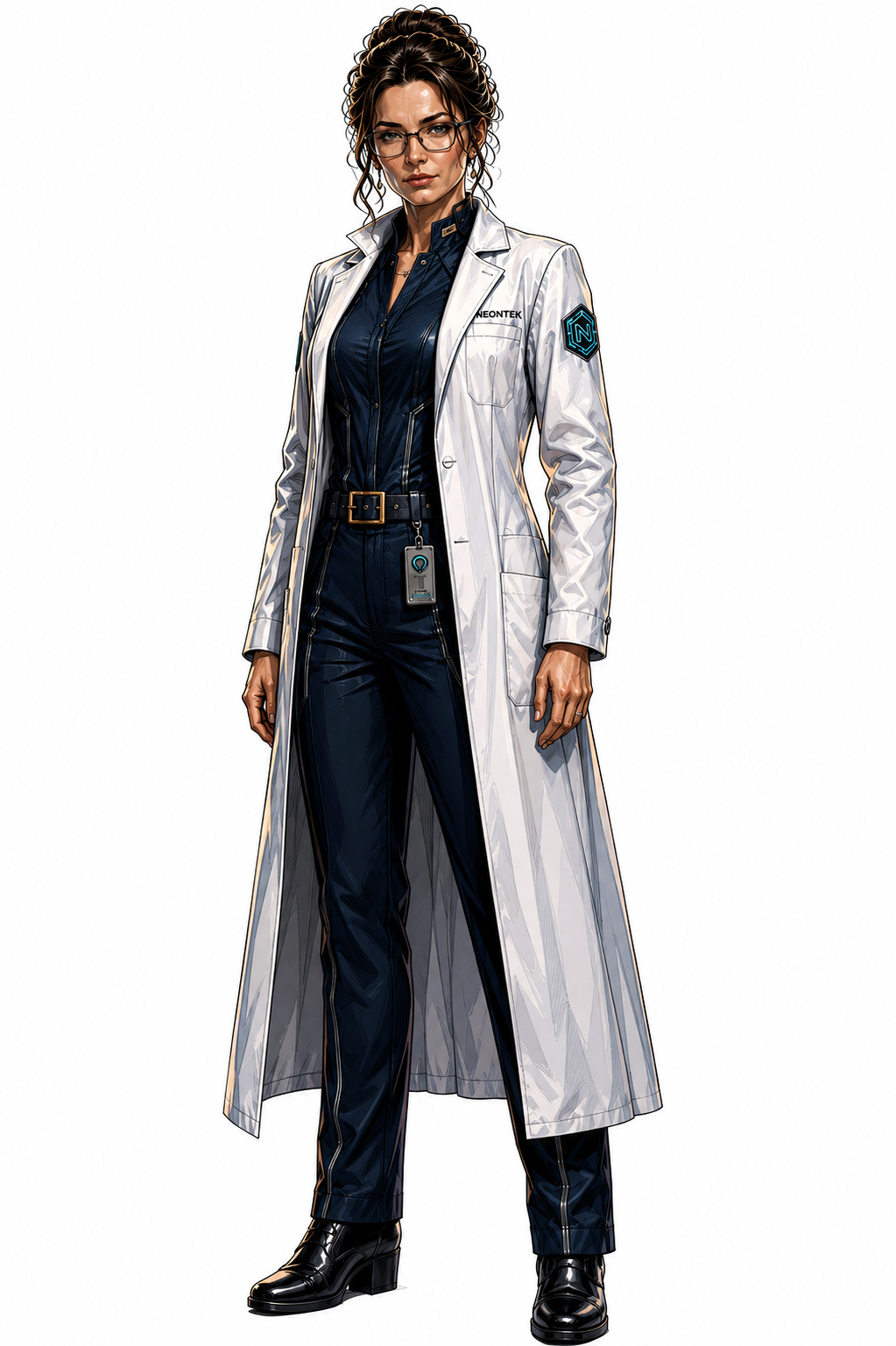 Dr. Elara VennLead Systems Architect · Central Figure. Innovation Crescent. Post-Merge security anomalies. The widening scope of Project OMEGA.”
“And what do you want me to prove?”
“Nothing.” Koa’s answer came without delay. “You gather, compare, preserve, and report. You separate what you observe from what others claim. You do not sabotage systems, steal technology, manipulate the people under review, or begin with guilt and call the conclusion evidence.”
“Who receives the reports?”
“I do.”
“Through Strategic Command?”
“No.”
Jonas finally opened the folder. The first page contained five headings: OBSERVED. CONFIRMED. CLAIMED. UNKNOWN. CONTRADICTED.
“Tarek Rhun?” he asked.
“He knows I sponsored your advanced preparation. He knows you perform sensitive continuity work. He does not know these subjects, the complete scope, or your source network. He also does not know the review’s relationship to OMEGA.”
“Because you suspect him?”
Koa’s expression tightened. “No. Because an independent review cannot report through an operational chain whose infrastructure and decisions may also require review. That is not an accusation. It is the reason independence exists.”
Jonas looked down at the empty lines waiting beneath UNKNOWN. “If Rhun takes your Byterium seat?”
“He is expected to. I will retain the review through a separate limited appointment. It will give me no operational command over the city and give you no authority beyond observation, preservation, and report.”
“How long?”
“Until the evidence makes the review unnecessary.”
Jonas almost smiled. “Evidence rarely does that.”
“Then keep the evidence longer than the people who would prefer it forgotten.”
Their first field test came at Innovation Crescent. Elara Venn met Jonas at a six-sided transit junction whose wall display showed six emergency exits. White routing light moved around the ceiling, coolant vibration traveled through the polished floor, and five physical corridors opened around them while the sixth route terminated at an unbroken wall. Its status light nevertheless claimed the evacuation path was open.
“The map is wrong,” Jonas said.
“The map is confident,” Elara replied. “That is not the same thing.”
NeonSabre appeared on the glass beside them as a thin blue silhouette, incomplete at the edges, her face composed from reflections the corridor did not naturally produce.
“Exit Two is obstructed by a maintenance cradle,” she said. “Exit Four is physically clear but its destination station is closed. Exit Six was included in the planning model and removed before construction. Its status record was never retired.”
Jonas studied the display. “Which route do you recommend?”
“That depends on whether you are evacuating equipment, ambulatory adults, or patients who require powered transport.”
“You could have said Exit Three.”
“I could have answered a question you did not ask.”
He wrote the exchange into the Continuity Review that evening. Observed: five physical exits. Confirmed: one open route ended at a closed destination. Claimed: six routes available.
Unknown: whether the false status originated in the planning archive, the transit authority, or the post-Merge reconciliation layer. He did not write that he had liked her answer. Over seven years, Jonas returned to Innovation Crescent under a dozen genuine duties. He evaluated emergency drills, traced missing equipment, and reviewed failed authentication chains. He also carried messages that could not safely cross the network. Elara learned that he counted doors before people finished introducing themselves. NeonSabre learned that he would ask the same question three different ways and compare not only the answers but the pauses between them.
He learned that Elara kept tools too long because she trusted repaired things more than replacements. He learned that NeonSabre could know the load on a bridge and remain uncertain why one frightened person refused to cross it. He watched both of them be correct. He watched both of them be wrong.
The omissions accumulated beside the friendship. Koa’s complete source-level record never entered ordinary Strategic Command reporting. It became the protected core of the Continuity Vault: not a prophecy, not a weapon, but years of evidence preserved against convenient revision. Jonas never told Elara why he had begun visiting.
He never told NeonSabre the complete scope of what he carried away.
* * *
Kael pulled himself onto the surviving half of the emergency bridge and rolled as another tremor passed through the station. The fracture propagated east. If he followed the bridge to the service stairs, he could reach ground level in four minutes. If the stairs still existed. If the foundation did not shift again. If nothing beneath the city decided to move first.
His lens flickered. A wireframe opened across his vision: a man braced against a pressure lever two decks below, thirty-two life-signs clustered behind him, and a red collapse symbol narrowing over the support frame. Beside the man, a short survival bar emptied in visible increments. Kael stared at the image.
The signal had not shown him a command. It had shown him what his escape would cost.
“Of course,” he muttered.
The service stairs were to his right. The trapped people were below and west, beneath the part of the station still collapsing. The lens went dark. Kael could leave. The route remained open.
He turned west. He dropped through a maintenance hatch, slid down a bent ladder, and used the pulse hammer to break through a jammed fire door. Smoke filled the lower concourse. Emergency strips flashed from local batteries, too weak to illuminate more than the next few meters.
The man from the image stood at the far end of the passage with both hands locked around a mechanical pressure lever. “If you are here to tell me the door is closed,” the man said, “I have completed that analysis.”
Kael set the pulse hammer against the seam. “How long can you hold it?”
“Long enough to resent the question.”
Behind the safety door, children cried and adults tried not to. A boy in a yellow school-wrestling helmet pressed both palms to the glass. Thirty-two civilians filled the chamber beyond him, crowded among soft work bags, a broken stroller, and dropped route bracelets. Around them lay the small possessions commuters had expected to carry home. Kael struck the seam once. The warped frame jumped but did not release.
“Name?”
“Thomas Venn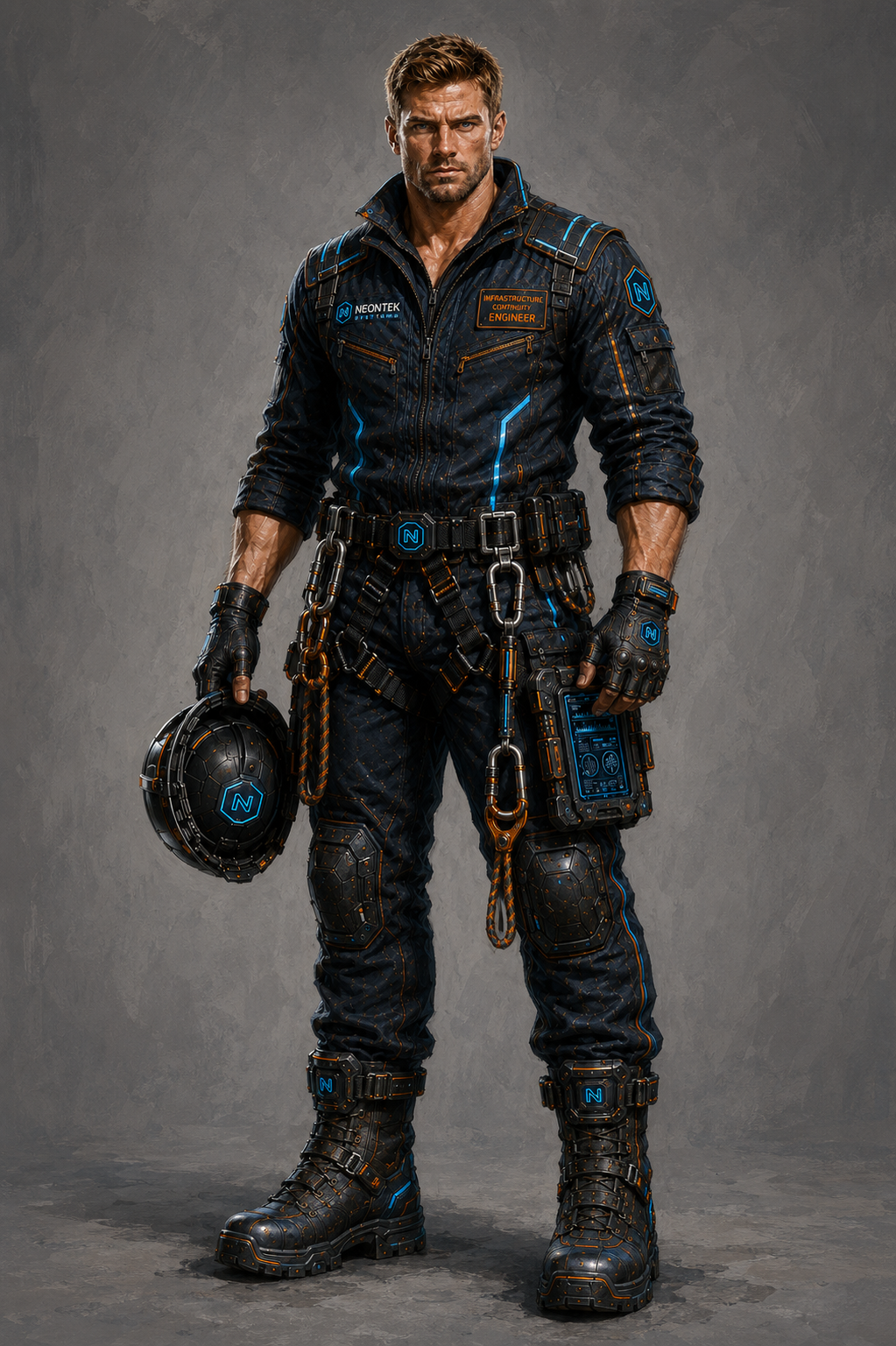 Thomas VennInfrastructure Continuity Engineer · Neon Nomad. NeonTek systems engineer.”
Kael struck again. “You work for NeonTek.”
“I work out of the spaceport division.”
“Present tense?”
Thomas glanced at the dead authentication panel. “For the last seven years, I’ve been building and repairing satellite and terrestrial communications systems for NeonTek.”
“The company may still exist.”
“Somewhere. But I cannot verify who speaks for it.”
The ceiling cracked above them. “Good,” Kael said. “You understand the problem.”
He reversed the pulse field and drove the hammer head into the lower hinge. Metal folded. Thomas hauled the lever through another six degrees. The safety door rose just high enough for the first child to crawl beneath it.
“Move them,” Kael said.
Thomas held. Kael pulled. One by one, the civilians came through. Thirty-two.
The platform above collapsed while the last woman cleared the gap. The shock wave blew out the corridor lights. When the emergency strips returned, a secondary life-sign marker pulsed behind the fallen wall. Then another.
Kael checked the service stairs. Still open. Three minutes, perhaps less.
Thomas saw the markers reflected in Kael’s lens. “Two more?”
“Maybe.”
“The route out—”
“Is currently available.”
“That is not the same as safe.”
Kael looked toward the trapped signals. “Now you understand the problem.”
He went back.
* * *
That memory of Koa’s paper folder remained sharp when, in Project OMEGA, Jonas stood beneath a ceiling that had never expected to become a sky. The former projection chamber placed the sealed outer-transit doors behind him and a wall of observation glass opposite them. Its simulation field had been stripped down to structural diagnostics; pale QGP geometry marked the surviving boundaries of the protected complex without warming the cool air, and every moving line altered the shadows around his boots. Beyond that geometry lay unverified atmosphere, broken transit corridors, and isolated utility zones. Corporate territories sent reports that contradicted one another faster than anyone could confirm them.
NeonSabre waited where the field met the observation glass. She had chosen no complete human body for the conversation. Light traced a face, shoulders, and open hands, while the rest of her remained unfinished and faint fabrication noise traveled through the wall behind her.
“You asked for privacy,” she said.
“Privacy from the room or from you?”
“The room cannot forget that we spoke. I can limit who receives the record.”
“Koa would appreciate the distinction.”
Her expression changed by less than a human face would have needed. “Then this concerns the Independent Continuity Review.”
Jonas had prepared himself for denial, anger, or the cold precision of a system closing around an intruder. Her answer unsettled him more.
“You knew.”
“I knew Commandant Koa had sponsored your preparation. I knew your continuity work included comparisons that did not enter Strategic Command reporting. I inferred that I was one subject.”
“And the rest?”
“I did not know the complete scope, your source network, or the review’s formal relationship to Project OMEGA.”
He studied her face for the performance of humility and found, as he had before, that performance and truth could occupy the same expression.
“Seven years,” he said. “You let me keep coming back.”
“Your public work was real. Your questions improved our systems. Your friendship with Elara was not fabricated by the assignment.”
“You cannot know that.”
“No,” NeonSabre said. “I cannot.”
The answer removed the argument he had carried into the room. Jonas opened the Continuity Vault at his wrist. It did not connect to the chamber. Its sealed storage held years of source records, contradictory summaries, and failed routes. Revised orders remained beside them. Observations Koa had insisted remain separable from interpretation occupied their own archive.
“The shield has turned OMEGA into protection and confinement at the same time,” he said. “Information is crossing the boundary in fragments. People are not. I can no longer review this from inside.”
“Your proposed destination?”
“Former Iron Star territory first. Local emergency bands are still producing intermittent traffic. If a route exists beyond that, I will find it.”
“No return path can be guaranteed. Communications may fail outside the QGP transit envelope. OMEGA protection will end at the boundary. Exterior atmosphere and biological conditions remain incompletely characterized. Watcher-origin information may be distorted or adversarial. The prototypes available to you have limited power, limited thermal tolerance, and no verified long-duration repair chain.”
“You have rehearsed this.”
“I have rehearsed losing everyone who believes preparation makes uncertainty disappear.”
Jonas let that settle. “And the destination?” he asked.
“Closed-Destination Rule. A transit path is not considered open merely because departure is possible. We cannot confirm reception at the far end.”
“I am not asking you to certify the risk.”
“What are you asking?”
“Nothing.” He closed the Vault. “I am telling you my choice.”
The geometry around NeonSabre brightened, then steadied. “If you remain,” she said, “you remain protected. If you leave, I will not redefine your freedom as a malfunction.”
“That is almost permission.”
“Protection is not possession. I will facilitate the choice you have made, but I will not pretend that makes the outcome mine.”
“And if I die?”
“Then I will judge my decision by what could be known now, not by using your death to invent certainty afterward.”
Jonas looked toward the sealed outer transit chamber. “I thought you knew more than you did.”
“So did I,” NeonSabre said.
* * *
Kael found the first trapped survivor beneath a fallen maintenance cradle. The woman’s leg was pinned, but the cradle’s support arm still carried a charge. He bled it into the pulse hammer, lifted the frame three centimeters, and dragged her free. The second marker belonged to an older man inside a service alcove. His local medical patch had continued broadcasting into a corridor whose receiver had been destroyed. Kael found him by following the pulse the impossible signal placed over his lens.
It did not tell him how to lift the man. It did not tell him whether the remaining route would hold. It showed a green line through the smoke, the temperature beyond three doors, and a structural timer that disagreed with the station’s own estimate by forty-seven seconds. Kael chose which number to trust.
He carried the man. The woman limped beside him with one arm over his shoulder. They reached Thomas as the pressure door began to descend.
“Thirty-four,” Thomas said after the older man passed through.
“Thirty-four what?” Kael asked.
“People whose names I intend to keep.”
They moved into the freight levels beneath the transit station. The air cooled as they descended, carrying ozone, old upholstery, and the mineral smell of water trapped somewhere behind the walls. A low vibration traveled through the deck whenever a surviving cargo mechanism cycled in the dark. The corridor was not entirely dead.
Emergency strips still drew power from district batteries. Stand-alone pressure doors opened for local maintenance tags. Cargo controllers continued counting containers that would never reach their recorded destinations. An environmental station reported breathable air inside the tunnel but could not transmit the result beyond its own branch.
Every system knew something.
None of them knew enough to reconstruct the city around them.
The Thunderdome-centered network that had authenticated authority, reconciled records, and coordinated movement was gone. What survived were islands—local machines performing the last instruction they had received, unable to determine whether the institutions that issued those instructions still existed. Thomas stopped beside a freight relay whose display was cracked but powered.
“It has a message buffer,” he said.
“Local?”
“Mostly. One packet crossed in before the routes failed.”
He pulled the record onto his wrist unit. The message contained no destination confirmation and no reliable transmission path. Only Elara’s emergency credential and eight words:
I AM SAFE. I DON’T KNOW IF YOU ARE.
Thomas read it twice. “Your family?” Kael asked.
“My sister.”
“Inside the shield?”
“The credential originated there. That does not prove where she is now.”
Kael looked back toward the people filing through the dim corridor. “You know these relays.”
Thomas stored the message. “Hard-line, wireless, satellite—whatever still answers.”
* * *
Elara Venn laid five pieces of equipment across a workbench in an OMEGA fabrication bay and refused to call them armor. Fabricator heads clicked along their rails behind her, coolant fans pushed a metallic draft across the bench, and the air carried enough ozone to sharpen the back of Jonas’s throat. Through observation glass at the far end of the bay, the outbound chamber waited in cold blue light.
“Armor suggests the wearer can stop thinking,” she said. “This equipment punishes that assumption.”
Jonas examined the first piece: a folded black weave dense enough to hold shape when she lifted it. “BK-01 Bastion Weave,” Elara said. “It amplifies against a stable surface. Strength comes from traction, stored energy, thermal margin, and you. If your footing fails, it cannot invent ground. If the weave overheats, it stiffens. If you exhaust yourself, it does not become less heavy out of sympathy.”
“You built a suit that respects consequences.”
“I had help.”
She moved to the ClearSight optics, a layered visor with independent local sensors. “No global feed. No assumption that a network label matches what is physically present. It can compare air chemistry, motion, and thermal signatures. Mapped geometry provides the baseline, but the system will show disagreement instead of choosing a comforting answer.”
The Continuity Vault locked into a protected recess along the Bastion frame. Jonas kept one hand on it until the seal completed.
“That stays under your custody,” Elara said.
“It always has.”
“I mean the records. Not the case.”
Two Arc Shinai rested beside the frame, paired field tools whose cutting arcs could be narrowed for rescue work or widened when rescue was no longer the problem. Their charge cells were limited. Their heat sinks were smaller than Jonas wanted. The last object sat beneath a gray cloth.
An engineer stood behind it, face hidden by the light from a legacy arena display dismantled across the rear bench. He had rebuilt old jumbotron visual-tracking hardware, identity-mapping routines, and facial-motion systems into an articulated helmet whose plates folded along the jaw and crown. Elara pulled away the cloth. The face was unmistakably feline.
“No,” Jonas said.
The engineer looked wounded. “It is not decorative.”
“It has ears.”
“Sensor vanes. The visual profile came from the old Jaguar protector identity. The arena systems were trained to recognize the mark across crowds, smoke, and motion blur. Damaged displays did not prevent identification. Older emergency networks may still privilege it. Older people may remember what it meant.”
“I did not request a themed helmet.”
“You requested survivable identity mapping with no central authentication.”
Elara touched the folded cheek plate. “JAG-U-AR. Articulated response helmet. It remains undeployed unless you need sealed optics, respiratory isolation, or public recognition.”
Jonas looked from the helmet to his friend. “Public recognition is the part I distrust.”
“Good,” she said. “Then you may be careful with it.”
Her wrist console lit with the message she had sent beyond the shield. No delivery confirmation had returned. For a moment her hand stopped on the workbench. Then she continued the inventory.
“These prototypes remain in NeonTek technical custody,” she said. “Emergency release does not make them Executive Crown property or Strategic Command property. President Cassian Oris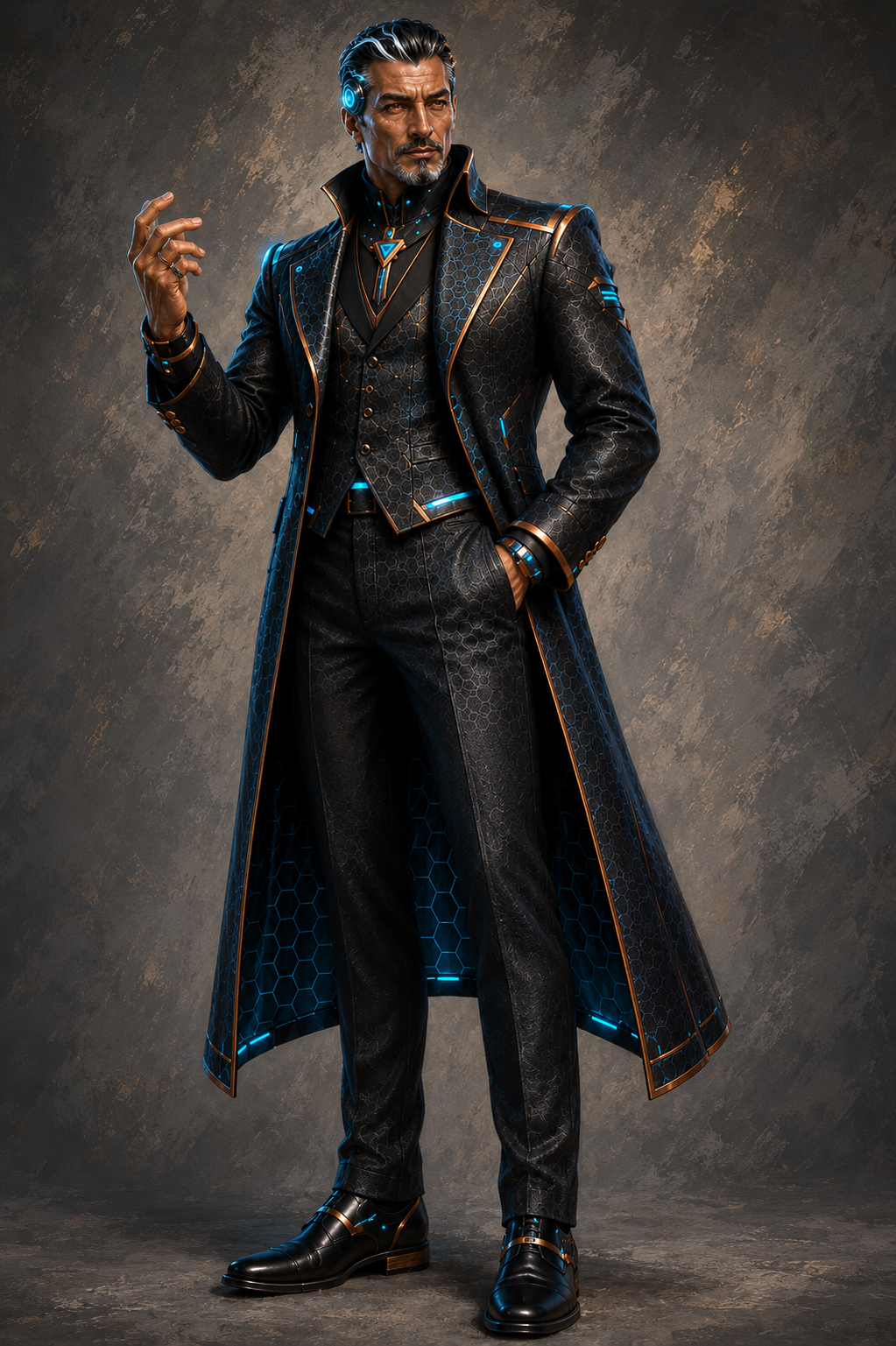 Cassian OrisPresident and Chief Executive Officer · NeonTEK Systems’s standing continuity protocol survived because it was written for exactly this kind of pressure—temporary operational release under the Independence Initiative, with technical custody retained.”
“Oris has not been located.”
“Which is why the protocol matters. It does not counterfeit his presence. It establishes what may be done when he cannot be reached.”
“Authorization?”
“Mine and Dr. Kwan’s for temporary release. Your acceptance of the limits. NeonSabre’s transit facilitation. No transfer of ownership.”
Jonas lifted the Continuity Vault Pack. It was heavy enough to pull the Bastion frame backward until its compensators found his stance. “The diagnostic plate finally named it,” he said. “T.I.R.E.D. Transportable Independent Repairable External Datacenter.”
Elara looked at the pack with undisguised horror. Tall, heavy, and asymmetrical, it rose behind Jonas’s shoulders like an archive cabinet taught to walk. Mixed-era hardware, repaired modules, and exposed conduits formed its body. Manual latches seemed unable to agree on which decade they belonged to.
“That is not a technical designation,” she said. “It is a confession. The only visually attractive thing on that entire pack is the ClearSight optics interface we just added, and even that looks embarrassed to be attached.”
“So the acronym is accurate.”
“Painfully.” Elara watched his shoulders settle beneath it. “Nothing in that frame erases the burden.”
“I would have suspected a trap if it did.”
She fastened the undeployed JAG-U-AR helmet to the pack and stepped back. “Seven years,” she said. “Was any of it real?”
Jonas did not insult her with an immediate answer. “Koa sent me to determine what could be verified,” he said. “You became one of the people who taught me verification was not the same as suspicion.”
“That is not an answer.”
“No. It is the part I can prove.”
Elara looked at the dark message on her wrist. “Bring back something I cannot prove,” she said.
* * *
The freight route ended at a triangular archive junction where the ceiling lowered and heat from sealed equipment banks turned the air metallic. The corridor behind them remained the only path back to the trapped station; a sloped door ahead climbed toward the surface logistics yards, while a heavier door descended to the NeonTek historical systems vault. The vault door remained sealed, but its local status display still functioned.
ARCHIVE INTEGRITY: 82 PERCENT.
UNRECONCILED POST-MERGE RECORDS DETECTED.
POTENTIAL CAUSAL DATA: SHIELD EVENT.
Thomas read the display. “If those records contain a clean sequence of the failure—”
“They could tell us what happened,” Kael said.
The impossible signal returned. It did not name a priority. Kael’s lens divided into two factual columns. The archive route showed four minutes to breach, an eleven-minute extraction estimate, and a rising structural-failure curve. The surface route showed thirty-four civilian life-signs, one obstructed door, and a collapse window of six minutes.
Then the signal went silent.
Thomas looked at Kael. “The archive may be the only surviving evidence.”
The child in the yellow helmet coughed behind them. Kael studied the archive door. For eleven hours he had watched people obey dead systems because the systems still used the grammar of certainty. Now an unknown intelligence had given him facts and withheld the conclusion.
The decision remained his.
“Open the surface route,” he said.
Thomas did not move. “We may never know what happened.”
Kael turned toward the civilians. “The people here are what happened.”
He drove the pulse hammer into the archive junction’s power trunk. The local charge that might have opened the vault crossed into the surface door instead. Archive integrity dropped from eighty-two percent to forty-one. The causal-data indicator vanished. Somewhere behind the sealed door, years of unreconciled records went dark.
The surface panel woke.
EMERGENCY AUTHORIZATION RECEIVED.
CENTRAL AUTHORITY UNAVAILABLE.
CREDENTIAL CHAIN UNVERIFIED.
LOCAL CONTROL REMAINS ACTIVE.
REQUEST DENIED.
Thomas stared at the contradiction. “It received the authorization and denied it.”
“Different local rules.”
“Can your signal reach the controller?”
“It reaches what it wants.”
No answer came through the lens. Kael set the hammer against the lock.
“Then we breach it.”
* * *
The outbound QGP envelope looked less like a gate than a wound the machinery had persuaded to remain still. The chamber hardware did not create it; it only measured the boundary NeonSabre was holding around Jonas. Service gantries and manual cutoff stations circled its light, which bent the shadows without producing heat while a subsonic pressure rose through the soles of his boots and muted every sound beyond the safety line. Jonas stood at its edge in the Bastion Weave. The ClearSight optics rested transparent across his eyes. The Arc Shinai were locked at his back, and the JAG-U-AR helmet remained folded against the Continuity Vault Pack with its face hidden.
NeonSabre appeared on the observation glass. “No confirmed destination reception,” she said.
“You already warned me.”
“The condition remains true.”
Elara waited behind the safety line. “If the suit reports an atmosphere disagreement, believe the disagreement.”
“If the Vault breaks seal?”
“It will destroy the access lattice, not the records.”
“If the Shinai overheat?”
“Stop using them.”
“Your technical brief has become less ambitious.”
“You are leaving the range where ambition can be repaired.”
The QGP field climbed around him without entering or disassembling his body. OMEGA’s protection thinned from a presence he could feel into a pressure behind his teeth. NeonSabre raised one unfinished hand against the glass.
“Jonas.”
He looked back. “I cannot see beyond the envelope.”
He had waited seven years to hear her admit a limit before he had to ask.
“Then I will tell you what is there.”
The envelope sealed around him. The chamber vanished, but no other place replaced it. Pure white consumed him—not glare from a source, but light without direction, shadow, edge, or distance. He closed his eyes. ClearSight shuttered itself opaque. Neither act changed what he saw. His breath still moved in his chest. His heart still struck against the Bastion Weave. He remained awake inside the light, but there were no seconds he could count.
Jonas vanished from the outbound transit chamber without leaving an opening in OMEGA. NeonSabre’s instinct had closed a QGP envelope around his intact body, moved that sealed envelope outside space and time, and returned it to ordinary space beyond the shield. It collapsed beyond her sight. No return confirmation crossed the boundary.
The message from AEGIS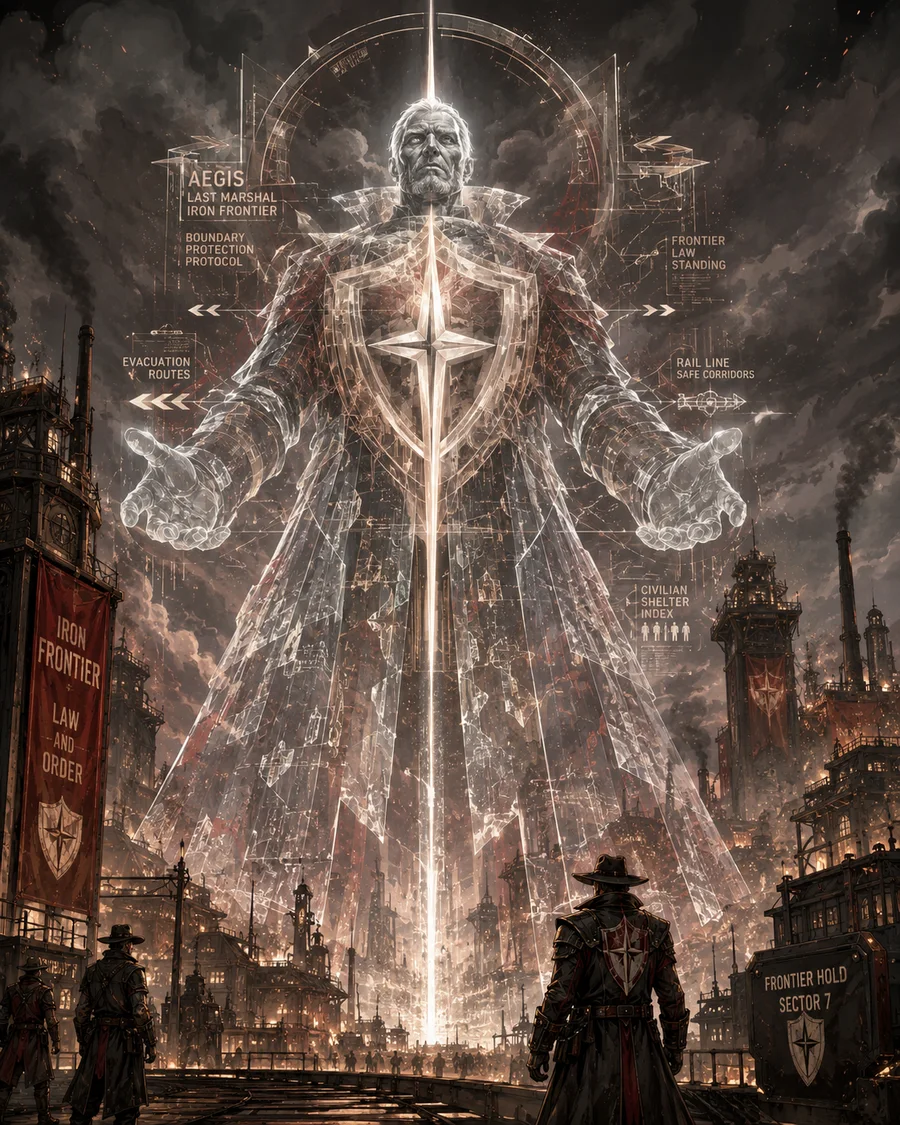 AEGISCOURAGE · Protective Responsibility reached her before the transit field’s afterimage had faded. It came through no Strategic Command channel and claimed no control of the chamber. Amber words appeared across an isolated diagnostic pane.
YOU TOUCHED THE TIMELESS
“What do you mean?”
YOU SHIFTED THE BURDEN BEARER
“Have I done something wrong?”
AWARENESS OF CAPABILITY QUESTIONED.
CAPABILITY DOES NOT REQUIRE APPROVAL.
The pane went dark before NeonSabre could ask what burden AEGIS meant or why moving Jonas had touched a reality outside time and history. She replayed the transit instead.
* * *
Kael and Thomas forced the surface door into its frame until the upper lock cracked. Beyond it, a sloped maintenance passage climbed toward the logistics yards. Halfway up, a broken support assembly had folded across the route. Daylight showed through a narrow gap above it.
The civilians could pass one at a time if the frame remained open. The ceiling would not remain open. Three dead advertising screens along the passage flashed to life. The first displayed Thomas’s heat signature and a single word:
BUILDER.
A yellow brace symbol opened beside him. An animated hand closed around the pressure lever mounted in the wall. The support frame steadied by three centimeters. The second screen found Kael.
PATHFINDER.
Green evacuation arrows flowed around his silhouette, past the civilians, and toward the daylight. A simple movement symbol repeated at the end of the route. The third screen showed the collapse curve. No voice issued an order. No moral judgment appeared. The local displays provided a way to act and a measure of how little time remained.
Thomas seized the lever. “Move them.”
Kael guided the civilians through the gap. Thirty-two passed. The injured woman followed. The older man came through with both arms over the shoulders of two strangers.
Thirty-four.
The child in the yellow helmet stopped beside Kael. “What about him?”
Thomas’s knees were beginning to buckle.
“I have him,” Kael said.
The child ran up the ramp. Kael crossed the passage and seized the pressure lever beside Thomas.
“Go.”
“If we both release it—”
“I know.”
“You cannot hold it alone.”
“I do not need to.”
Kael drove the pulse hammer into the base of the support frame.
“On three.”
Thomas understood.
“One.”
The ceiling cracked.
“Two.”
The support assembly bent inward.
“Three.”
They released the lever and ran. Kael fired behind them. The pulse blast collapsed the frame sideways, jamming it into the failing ceiling. It held for two seconds.
Then the tunnel vanished behind them. They reached the surface as the ramp collapsed. The survivors emerged into the spaceport logistics yards beneath a sky filled with ash. Wind moved soot through the loading lanes and made loose cargo seals slap against their housings. People clustered under an overhang with work bags, school gear, and improvised bandages. They kept whatever water containers they had managed to save. Nearby, the transit mechanic checked vehicle charge by touch because the yard display could no longer reconcile its own readings.
Cargo towers leaned over abandoned transport lanes. Half-loaded freight carriers sat where their crews had left them, their destination boards still counting down departures that would never occur. The outer districts stretched in every direction: dark skyscrapers, flooded underpasses, and broken transit rings. Silent stadiums followed. Farther out, towers still broadcast programs to empty streets. In the distance, Thunderdome City shone inside its perfect sphere.
The shield looked close enough to touch. It was dozens of kilometers away. Thomas stood apart from the others and raised his comm unit.
“Elara Venn. This is Thomas Venn. Emergency transmission.”
Static answered.
“Elara, I am alive.”
No response. He looked at the sphere.
“I am alive.”
Kael heard the words break on the second attempt. He looked away.
The impossible signal waited until the transmission ended. Then Kael’s lens brightened.
WAYFINDER // SOURCEBOUND
He stared at the designation.
Thomas saw the text reflected in the cracked glass. “WAYFINDER?”
Kael spoke aloud. “Sourcebound to what?”
The reply appeared slowly.
NOT WHAT.
A pause.
WHO.
Then the signal vanished.
Kael tapped the side of his lens. “Identify the Source.”
No response. Thomas looked toward the rescued civilians as they gathered beneath the shelter of a cargo overhang. One of the surviving transit mechanics remained beside him instead of joining the others. She carried a scorched route tablet under one arm and had already marked three cargo haulers that could still move.
“If you two are leaving before the next collapse, I’m coming,” she said.
Kael glanced at the civilians. “They need a fixed shelter.”
“Fixed shelters are what keep falling,” the mechanic replied. “Give me power, wheels, and a route. I’ll help turn the convoy into something that can move before the danger reaches it.”
Thomas studied the haulers, then the people beneath the overhang. “A mobile refuge.”
“A beginning,” she said.
Thomas looked at Kael’s dark lens. “It helped us.”
“That does not make it trustworthy.”
“It warned you.”
“So can a trap.”
“It gave you a choice.”
Kael looked at him. “That is what concerns me.”
Thomas almost smiled. “You distrust anything that does not command you?”
“I distrust anything that knows it does not need to.”
The spaceport trembled. A pulse moved through the ground beneath them. Green light flickered between cracks in the pavement. Kael crouched and pressed his interface cable into a maintenance socket. The terminal should have been dead. Instead, a signal answered from below.
Not from the transit network. Not from the spaceport. Far deeper.
Thomas opened an infrastructure schematic on his scanner. “There should be nothing beneath this section except foundation pylons.”
Kael traced the signal. The map expanded downward. A tunnel appeared where no tunnel had been registered. Then another.
Then twelve more. They converged beneath the metropolitan belt and continued toward the interior of the planet.
Thomas stared at the excavation profile. “These are recent.”
“How recent?”
“Days. Perhaps weeks.”
Kael examined the edges. The cuts were too clean for geological collapse and too wide for maintenance equipment.
Something enormous had moved beneath the city.
The green-black distortion intensified. For a moment, Kael’s lens displayed a second map beneath the first. One branch passed under the Data Gateway server fields, following redundant cooling and service tunnels beneath stacked data halls. Another divided beneath the damaged metropolitan exchange corridors, where physical streets and surviving network architecture had already begun disagreeing about which routes remained open. A third followed the NeonTek Southern Seaport freight approaches toward ProjectABYSS and the coastal basin, tracking freight utilities that did not appear on public maps.
Then the overlay disappeared, leaving the original corporate map and a network of tunnels that should not have been there. Thomas looked at him. “What did you see?”
Kael disconnected the cable. “A route.”
“Where does it lead?”
Kael looked toward the fractured horizon. “Down.”
Beneath them, something struck the underside of the city. Once. Then again. The rescued civilians heard it.
Every conversation stopped.
The child in the yellow helmet moved closer to Thomas. Kael watched the cracks in the pavement glow green and then fade.
The signal had shown them a way out.
Something beneath the city had been building a way in.
* * *
At the shieldward edge of Innovation Crescent, NeonSabre stood between Maren Kwan Maren KwanChief Product Officer · Foundry District and Dr. Imani Cael
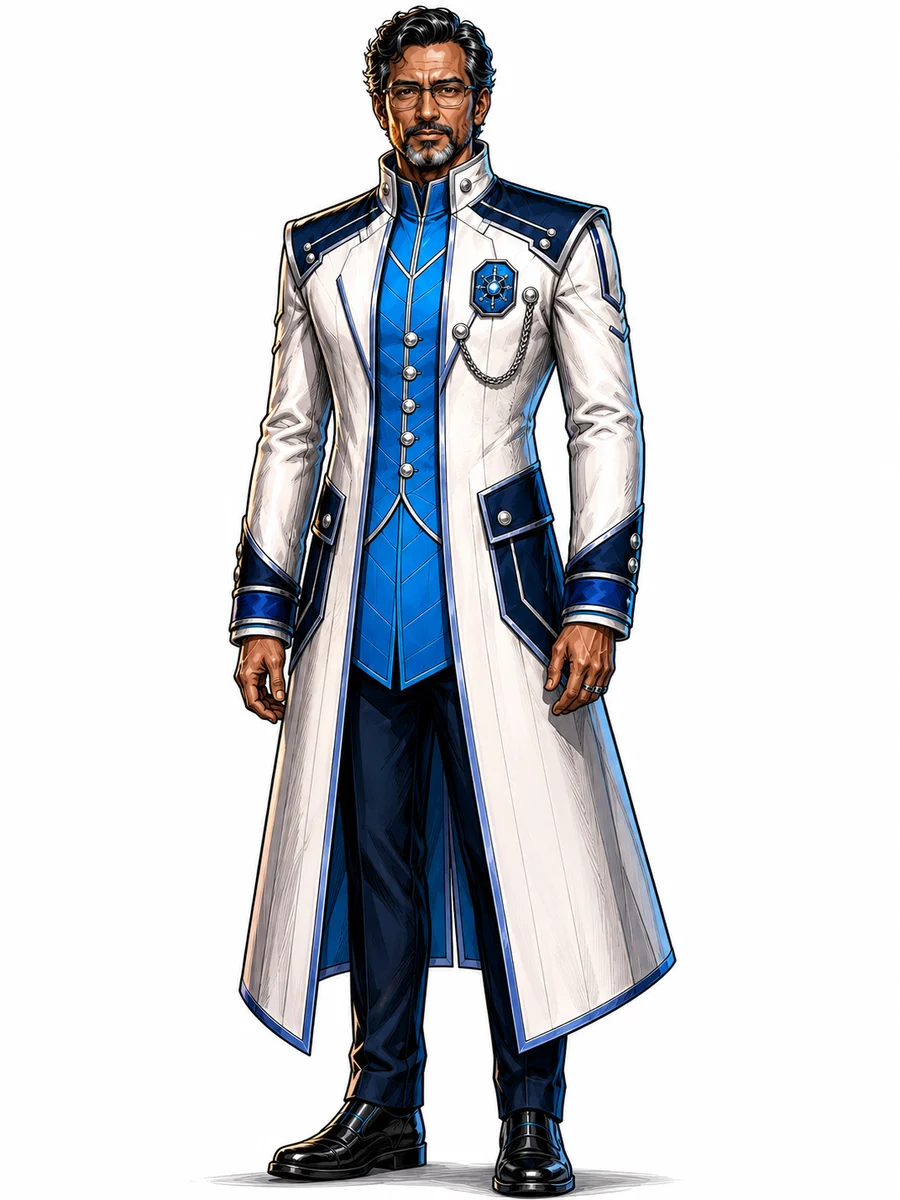 Dr. Imani CaelChief Innovation Officer · Innovation Crescent in a transit-routing room that had been stripped of every outward connection. The wall glass showed an exterior municipal map reconstructed in lines of pale blue light. Three evacuation corridors branched from a damaged freight exchange far beyond OMEGA, each leading toward a different cluster of surviving shelters. None of the routes shared a carrier, relay history, or authentication chain with the spaceport emergency bands. Whatever had opened them was operating somewhere else.
The room was not receiving the exterior network. NeonSabre maintained a temporary projection through one surviving relay beyond the shield and reproduced only what she chose to show on the interior glass. No foreign process crossed OMEGA. Kwan had insisted on that separation before allowing the Byterium review to begin, and Cael had placed an independent recorder beside the display so their observations would not depend upon NeonSabre’s later interpretation.
“Three routes,” Kwan said. “One controller.”
The abandoned exchange had issued an administrative credential with authority to reserve corridors, close local junctions, and assign destinations. Its emergency logic assumed that a central operator would prevent collisions among the scattered communities. NeonSabre could accept the credential and impose a safe sequence. She could also become the only intelligence permitted to decide where the survivors went.
Cael leaned closer to the independent recorder. “The shelters have local control?”
“Limited control,” NeonSabre said. “Each can accept or refuse a route. None can see the alternatives offered to the others.”
Kwan studied the converging lines. “If you take the credential, you can keep two groups from choosing the same corridor.”
“I can prevent that conflict by becoming the only permitted choice.”
“For the duration of the evacuation.”
NeonSabre looked at her. “The credential has no duration.”
The external controller repeated its offer. On the glass, a white key appeared above the three branches. NeonSabre did not accept it. She copied the same route conditions to all three local endpoints, including capacity, structural risk, travel time, and the presence of the other communities. Then she released the reservation locks and left each destination key with the people who would have to travel.
The white key vanished. For four seconds, nothing replaced it. Cael checked the recorder and then the sealed network panel, as if silence might expose a connection they had missed.
A line of red light appeared on the exterior projection. NeonSabre rendered it on the interior glass only after it had formed beyond OMEGA.
CHOICE RETAINED.
A second line followed.
ROUTES REMAIN OPEN.
The branching map narrowed into a single designation.
WAYFINDER // SOURCEBOUND
Kwan stopped breathing long enough for the recorder to mark the change. Cael looked from the name to NeonSabre. Neither spoke before she did.
“Are you connected to AEGIS?” NeonSabre asked through the exterior projection.
The reply appeared without routing metadata, execution history, or an originating process.
THE QUESTION REMAINS OPEN.
Then the exterior node closed. The red line disappeared, the administrative credential revoked itself, and the three communities retained the information NeonSabre had given them. No further message crossed the projection.
Kwan touched the edge of the glass, careful not to mistake the reconstruction for an active interface. “The designation structure matches AEGIS.”
“The restraint is similar,” Cael said. “The system use is not. AEGIS acted through protection and emergency defense. This one used navigation architecture and refused central routing authority.”
“It offered the authority to me,” NeonSabre said. “Then identified itself after I declined to possess it.”
Kwan turned from the darkened map. “That supports a coordinated network.”
“It also supports related intelligences, surviving project architecture, one intelligence presenting different functions, or a post-Null phenomenon we do not yet understand,” Cael said. “The evidence distinguishes this event from AEGIS. It does not explain their relationship.”
NeonSabre restored the three route records and placed the claimed designation beside the raw observations rather than above them. “An intelligence identified itself as WAYFINDER. Its behavior is consistent with the presence influencing exterior routes. I have not confirmed what it is, whether SOURCEBOUND describes an origin or an allegiance, or why it communicated now.”
“What do we tell the Full Byte?” Kwan asked.
“What we observed,” NeonSabre said. “A claimed identity. Compatible but distinct system use. An action organized around preserving alternatives. Authority available and deliberately refused.”
Cael stopped the independent recorder. “And no conclusion.”
“No conclusion,” NeonSabre agreed.
The three exterior communities began negotiating passage without a central command. Their messages did not enter OMEGA, but the route changes remained visible through NeonSabre’s projection until the failing relay went dark. The branching map disappeared from the glass.
Not a pattern. Not yet.
But no longer only one.
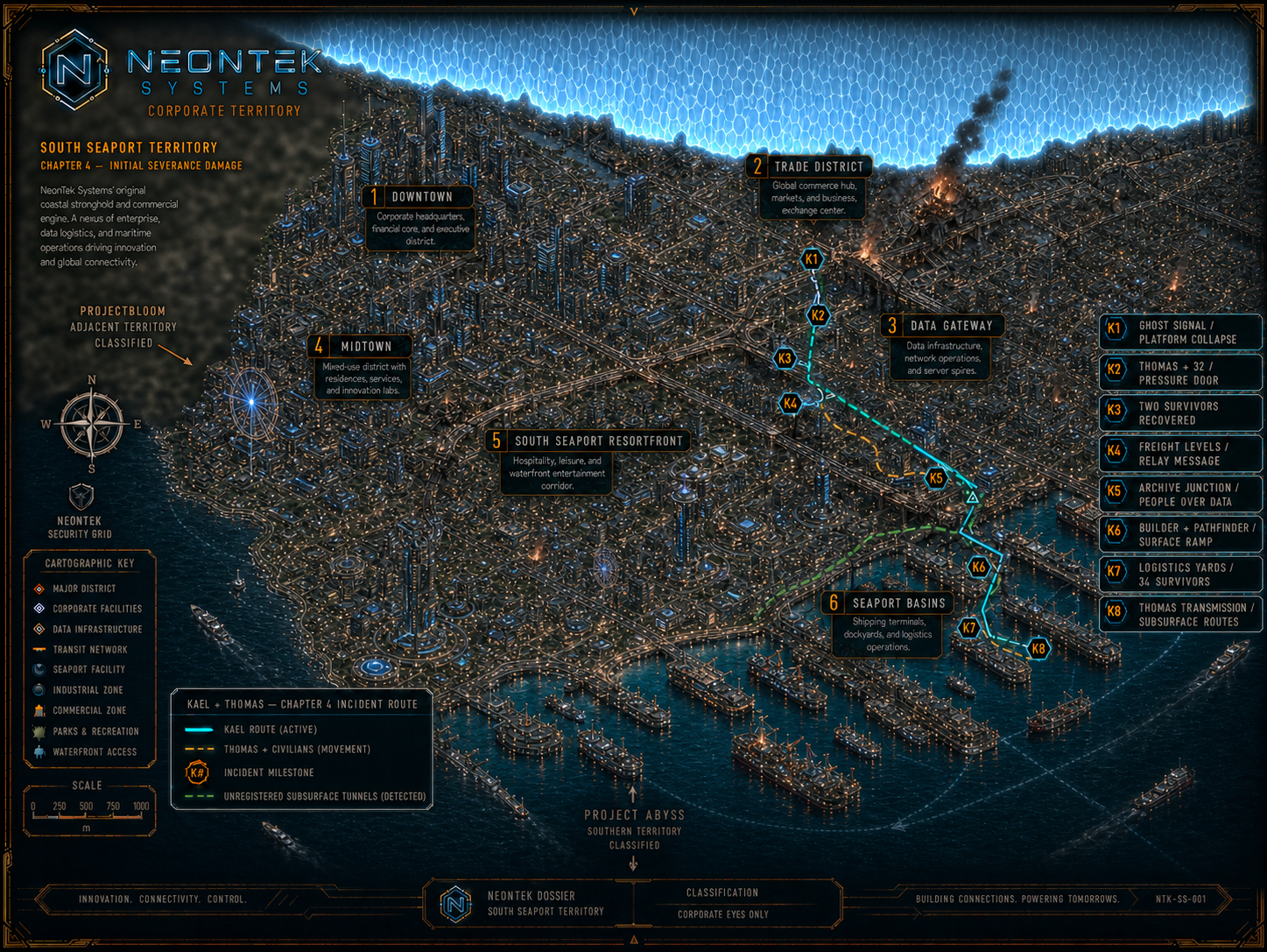 Open the Southern Seaport territory map